Know what you’re buying before you evaluate tools When you start comparing platforms, begin with the real buying problem: you want faster quotes, fewer manual steps, and repeatable production for ...

10Sep
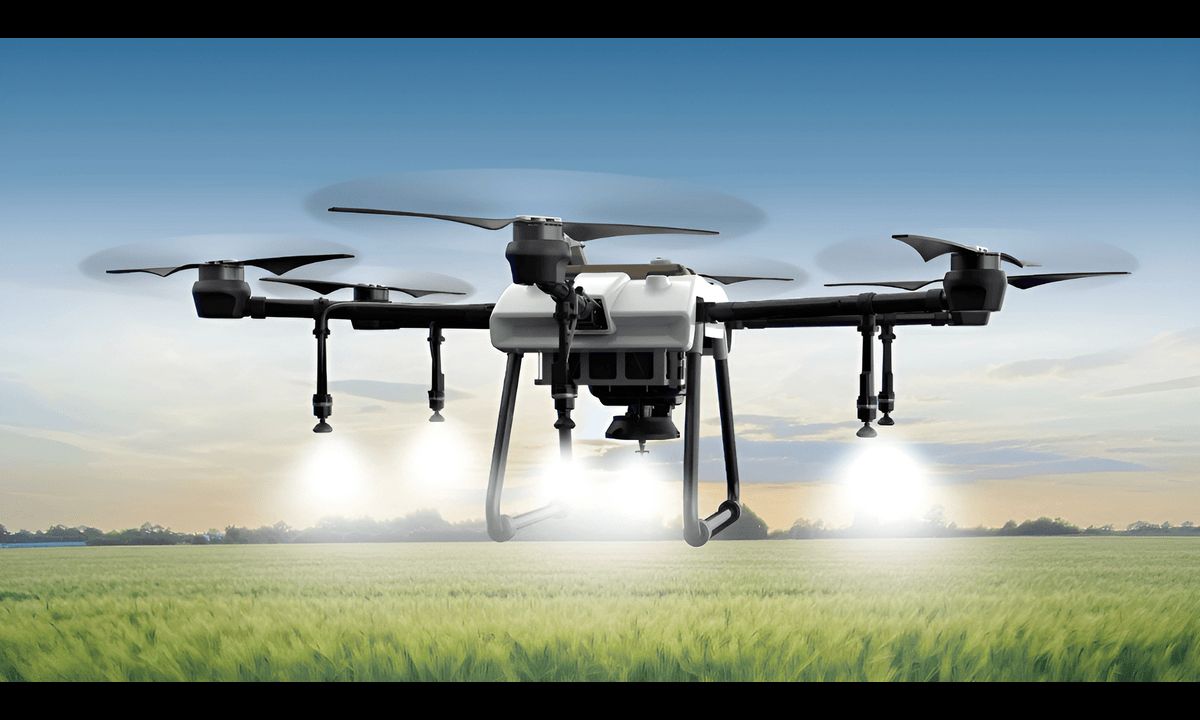
When drone makers move from concept to flight-ready hardware, component sourcing is only part of the challenge. Teams also need service clarity: how a supplier compares motor and servo options, how it helps select KV, voltage, torque, and packaging fit, and how it supports tuning for real-world flight behavior. Kpower Technology Co. expands beyond single-item supply by positioning its UAV motor Kpower Technology Co. Expands UAV Motor and Servo Solutions for Drone Power Motors and FPV Racing Drone Motors and servo ecosystem around engineering decision points—helping customers match propulsion output and precision motion control requirements. For procurement and engineering stakeholders, a service-comparison approach can reduce iteration cycles by aligning propulsion characteristics with control subsystem needs, whether the target is an integrated aerial drive system or a high-speed FPV platform.
UAV motor projects vary widely in what “performance” means—some prioritize thrust-to-weight and rapid acceleration, while others emphasize stable efficiency across sustained operation. Kpower’s service-oriented comparison focuses on how different motor families behave under demanding flight regimes and how they integrate into compact structures. Customers can evaluate options across mainstream drone power motors and professional FPV racing drone motors, then narrow selection based on electromagnetic design choices, manufacturing precision, and drive system tuning. The differentiator is not only product variety (including multiple KV values, voltage specifications, and dimensional sizes), but also the way engineering support connects motor physics to vehicle constraints such as wiring access, mounting space, and dynamic response requirements. For teams building integrated aerial drive systems, this service model helps translate performance targets into practical component configurations.
Servos are the motion-control backbone for gimbals, camera stabilization, payload mechanisms, and precision steering structures. A useful service comparison examines torque needs, accuracy targets, environmental durability, and communication protocol compatibility. Kpower expands its servo lineup with brushless, coreless, digital, micro, waterproof, and high-torque industrial servos, enabling selection based on load characteristics and installation constraints. From a service standpoint, the company emphasizes multi-protocol integration, supporting PWM, UART-TTL, RS-485, and CAN-bus control methods, so teams can match control electronics without forcing redesigns. This matters when engineering teams need consistent control response—especially where rapid movements must remain stable under vibration and airflow. By comparing servo types against control subsystem requirements, customers can better align payload execution and precision aerial mechanisms with the rest of the drone power and propulsion stack.
Kpower Technology Co. strengthens drone development support by treating motors and servos as complementary parts of a single engineering outcome: reliable propulsion plus precise control. The service comparison angle—linking motor power behavior to integration constraints, and servo control characteristics to torque, accuracy, durability, and protocol fit—helps teams evaluate options faster and reduce mismatched component decisions. For builders seeking an end-to-end, scenario-adaptive approach, exploring kpower.com can clarify how propulsion and motion-control solutions are matched for UAV motor and FPV racing drone motor applications, including integrated aerial drive system needs.


 How to create new field